
Continuing to protect Europe against COVID-19: Outcomes from the CTI’s roundtable
The COVID Transition Initiative has published the full report from its 31 March roundtable in Brussels.
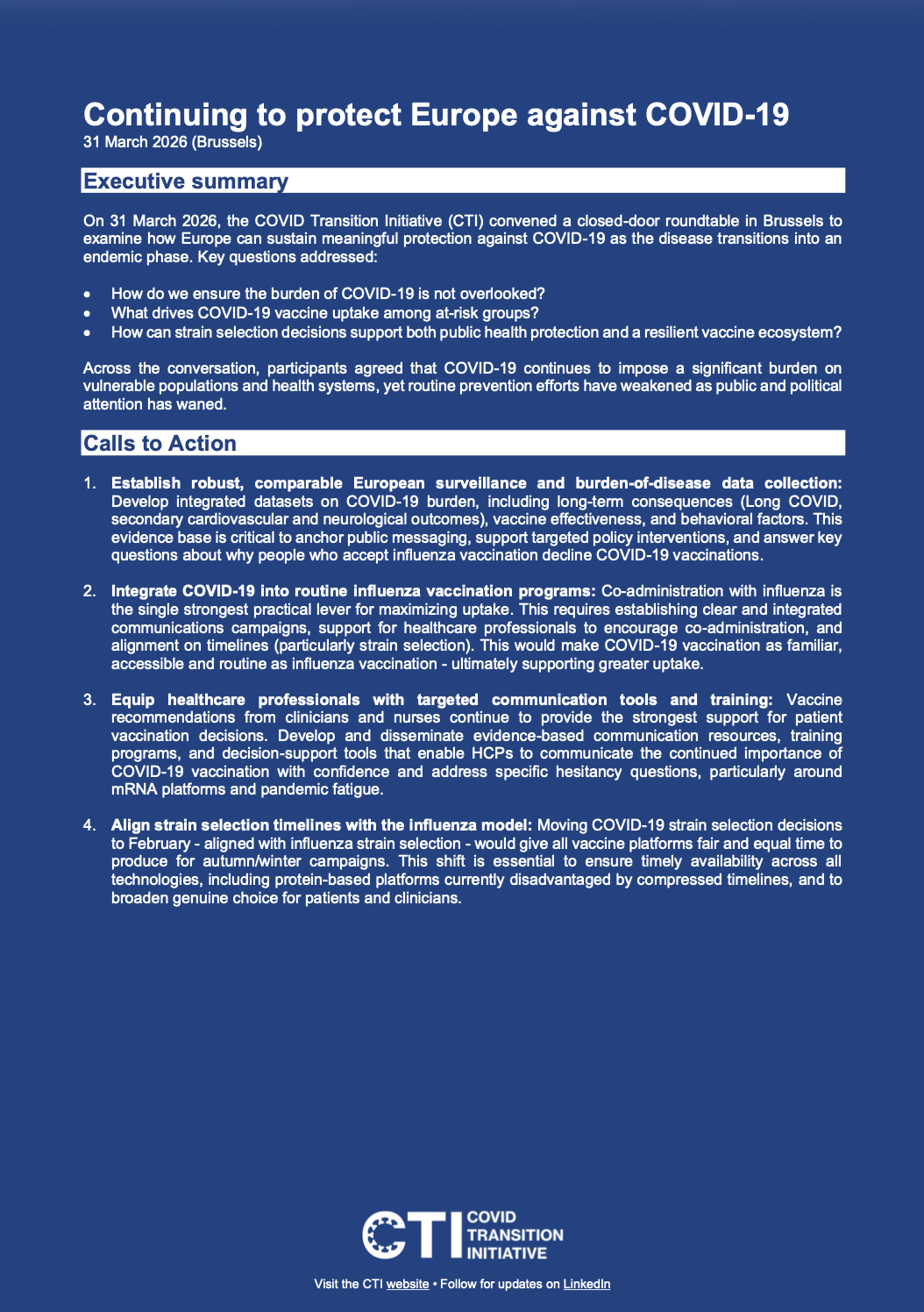
The closed-door discussion , brought together experts from academia, public health, clinical practice and patient organisations to identify key steps needed to strengthen Europe's approach to endemic COVID-19.
Calls to Action:
Establish robust European surveillance and burden-of-disease data: Develop integrated datasets on COVID-19 burden, including long-term consequences (long COVID, secondary cardiovascular and neurological outcomes), vaccine effectiveness, and behavioural drivers of vaccine decisions. This evidence base is critical to anchor public messaging, support targeted policy interventions, and answer key questions - including why people who accept influenza vaccination decline COVID-19 vaccines.
Integrate COVID-19 into routine influenza vaccination programmes: Co-administration with influenza is the single strongest practical lever for maximising uptake. This requires integrated communications, support for healthcare professionals to encourage co-administration, and aligned timelines - making COVID-19 vaccination as familiar, accessible and routine as influenza vaccination.
Equip healthcare professionals with targeted communication tools and training:Recommendations from clinicians and nurses remain one of the strongest predictors of vaccination. Evidence-based communication resources, training programmes, and decision-support tools are needed to help healthcare professionals address hesitancy with confidence, particularly around mRNA platforms and pandemic fatigue.
Align strain selection timelines with the influenza model: Moving COVID-19 strain selection decisions to February - in line with influenza - would give all vaccine platforms equal time to produce for autumn/winter campaigns. This shift is essential to ensure timely availability across all technologies, including protein-based platforms currently disadvantaged by compressed timelines, and to broaden genuine choice for patients and clinicians.
The CTI will continue to develop evidence-based, policy-relevant recommendations across its three workstreams - Awareness, Adoption, and Adaptability - and to engage national governments, EU institutions, and key stakeholders in translating these insights into action.